Quick Wins
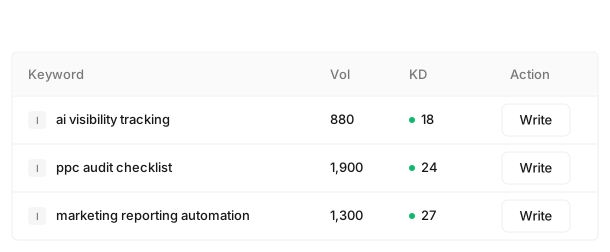
Find keywords close to ranking higher and focus on the easiest gains.

Manage the keywords, clusters, and content plans behind your rankings. Serpy helps you spot what is moving, understand what needs attention, and turn search opportunities into planned content.
Start for freeTrusted by teams building visibility across AI search.










Build focused keyword lists for the topics, services, and markets you care about. Serpy helps you monitor movement across those keywords, spot quick wins, and catch rankings that are starting to slip.
Find keywords close to ranking higher and focus on the easiest gains.
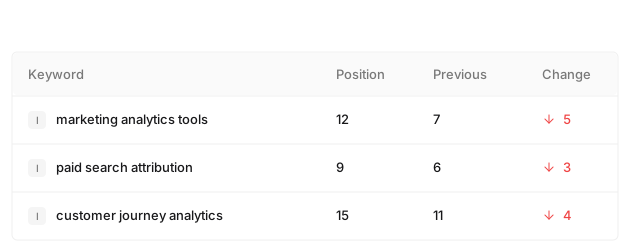
Spot slipping rankings so you know which content needs attention.
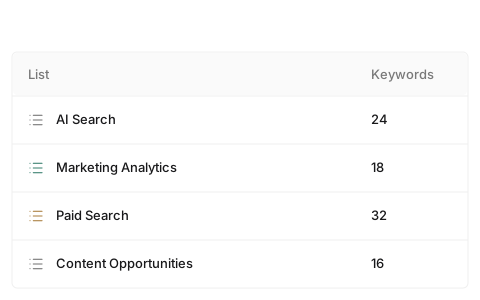
Group the keywords that matter to your brand into focused lists.
Review rankings and related searches, turn keywords into outlines, and build topical clusters for connected content.
Review ranking pages and related searches to understand what performs and where to expand your coverage.
Plan upcoming content, schedule articles, and keep your publishing organized in one place.
Strategy gives you one place to organize important keywords, build topic clusters, plan content, and connect that work to a publishing schedule.
Yes. You can create focused keyword lists around your topics, services, markets, or campaigns and keep the search priorities behind your strategy organized in one workspace.
Serpy brings ranking and keyword signals together so you can spot terms that are close to stronger positions, as well as rankings that may need attention before they decline further.
Topic clusters group a primary keyword with related supporting keywords. This helps you plan broader topical coverage instead of treating every keyword as a separate content idea.
Yes. You can send a cluster into Serpy’s outline and content workflow with its primary keyword, supporting keywords, and topic context already attached.
Yes. Serpy lets you place planned content on a publishing calendar and schedule or publish it through a supported website integration while keeping it connected to the original strategy.
Opportunity Discovery helps you find and evaluate possible keywords, content gaps, and page improvements. Strategy helps you organize the opportunities you select into keyword lists, topic clusters, planned content, priorities, and a publishing calendar.
A content strategy roadmap is a prioritized plan showing which topics and pages to work on, how they support one another, and when they should be created or updated. Serpy keeps that roadmap connected to the research and keywords behind each decision.
Yes. Your strategy can include both new content and improvements to existing pages. This helps prevent teams from creating a new article when strengthening a page that already has history and visibility would be the better move.
A content calendar turns a list of ideas into a realistic publishing sequence. It helps teams coordinate research, writing, reviews, updates, and launches while maintaining balanced coverage across important topics instead of publishing whatever is easiest next.
Yes. Keeping important keywords organized in Serpy makes it easier to review movement, identify terms close to stronger positions, and catch declines that may require a content update or additional supporting coverage.
Strategy is useful for in-house SEO and content teams, agencies, consultants, and marketing leaders who need a shared view of priorities, topic coverage, upcoming content, and the reasoning behind the roadmap.
Get started with a 7-day free trial of Serpy