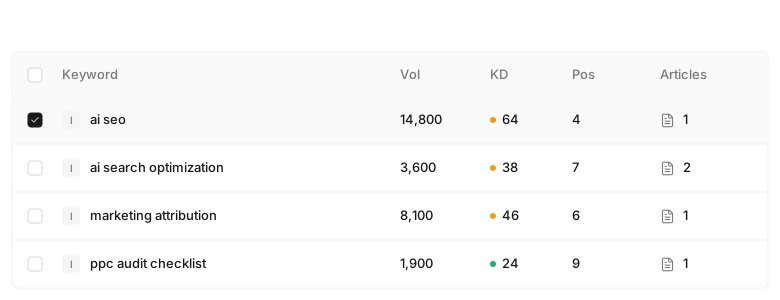
Find real search demand
See the keywords, questions, search volume, and difficulty behind the topics your audience is already looking for.

Find opportunities without manual research
See what people search for, what competitors rank with, and where your site is missing coverage. Serpy turns traditional SEO research into clear opportunities for content that can perform in Google.
Start for freeTrusted by teams building visibility across AI search.








Find search demand, related keywords, questions, and topic clusters before deciding what to create.

See what competitors rank for, where they are winning, and which gaps are worth turning into content.

Analyze a URL to uncover keywords the page could rank for, under-covered topics, and supporting content ideas.

Scan your website for missing topics, weak pages, partial coverage, and content gaps.

Turn discovered gaps into clear recommendations that can move into Serpy's content workflow.

Understand what searchers expect to find and which content format best matches each opportunity.

See whether the best next move is to publish something new, strengthen an existing page, or skip the opportunity.

Learn which formats, angles, and topics consistently appear in top-ranking content before deciding what to produce.
Serpy takes keywords, questions, and market data and turns them into clear content opportunities, so you can see what people are searching for and what is actually worth creating next.
See the keywords, questions, search volume, and difficulty behind the topics your audience is already looking for.
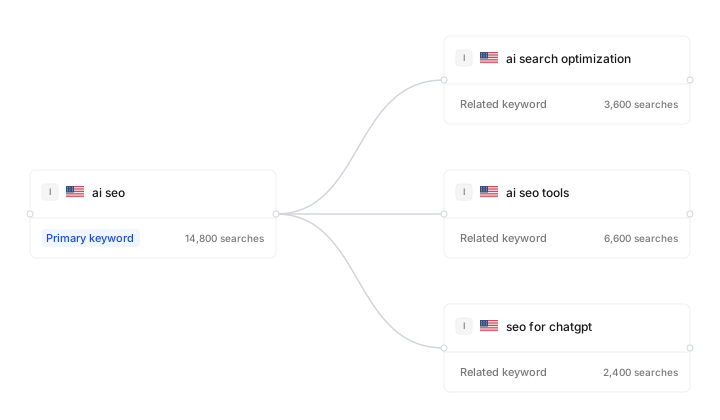
Serpy groups related keywords and questions together so one page can cover the full topic instead of chasing disconnected terms.

Turn research into a clear next step, whether that means creating a new article, building a landing page, or sending the opportunity into your strategy.
Bring keywords, competitor gaps, and page insights together—so your research ends with a clear next step, not another spreadsheet.
Scattered reports, endless sorting, and no clear plan.
One connected workflow. Clear opportunities, ready to act on.
Start with a keyword, an existing page, your website, or a competitor to find what to create next.
Find search demand, related keywords, questions, and topic clusters from a seed keyword. Use this when you want to explore a market, plan content from scratch, or build topical coverage around a theme.

 Google Search Console
 WordPress
 Shopify
 Webflow
 Wix
Wix Framer
 Lovable
 Replit
Opportunity Discovery helps you find content opportunities from keyword demand, competitor gaps, page-level targeting, and site-wide scans. Instead of leaving research scattered across reports, Serpy shows what is worth creating, improving, or prioritizing next.
Yes. Serpy can scan your website to identify missing topics, weak coverage, partial coverage, and pages that may need more depth or supporting content.
Serpy compares your site against competitors to show what they rank for, where they are capturing demand, and which gaps may be worth turning into content opportunities.
Yes. You can search from a keyword, topic, or market to uncover related keywords, questions, search demand, and topical clusters before deciding what content to create.
Page Targeting lets you enter a URL and see which keywords the page could rank for, what topics are under-covered, and where supporting content could help it perform better.
Yes. The best opportunities can move into Serpy’s outline and content workflow, so research context carries through into planning, writing, optimization, and publishing.
A keyword tool usually returns search terms and metrics. Opportunity Discovery combines that demand with competitor coverage, your existing pages, related questions, topical relationships, and content recommendations so you can decide whether to create a new page, improve an existing one, or deprioritize the idea.
Serpy can use keyword and question data, search demand, competitor rankings, page-level coverage, website scans, and connected search performance signals. Bringing those sources together helps separate a promising opportunity from a keyword that only looks attractive in isolation.
Serpy helps you compare opportunities using signals such as demand, relevance, current coverage, competitor strength, and whether an existing page can address the topic. The goal is to make the reason behind a recommendation clear instead of producing an unexplained score.
Yes. Serpy groups related ideas so you can see which terms belong on one comprehensive page and which deserve supporting content. This reduces duplicate articles and helps build stronger topical coverage.
Yes. Opportunity Discovery is not limited to new articles. You can use page targeting and website scans to find pages with missing coverage, weak keyword alignment, or room for supporting content, then move the opportunity into an improvement workflow.
It is designed for SEO teams, content marketers, agencies, consultants, and founders who need to turn research into a practical content roadmap without combining several exports and spreadsheets by hand.
Get started with a 7-day free trial of Serpy